
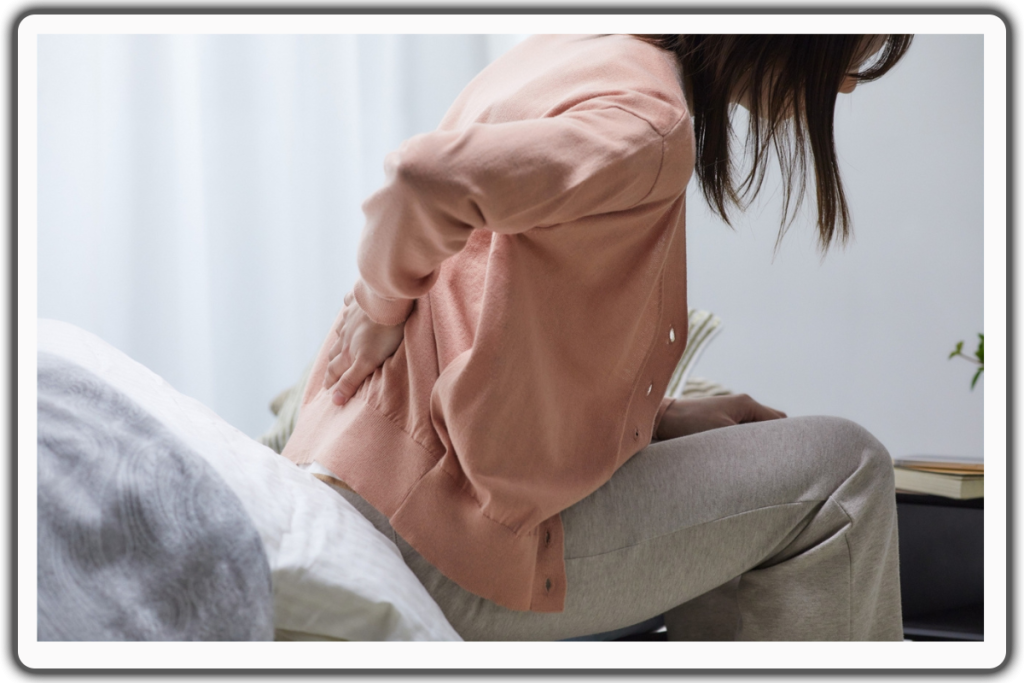
Pelvic and Lower Back Pain: 7 Simple Exercises to Reduce Pain and Restore Mobility Naturally
Pelvic and lower back pain is one of the most common musculoskeletal complaints today. Whether caused by prolonged sitting, poor posture, muscle imbalances, pregnancy, or injury, pain in this region can interfere with daily life, sleep, and movement.
The good news? Targeted exercises can help reduce pain, improve stability, and restore function without expensive equipment or complicated routines.
In this article, you’ll learn why pelvic and lower back pain occurs and discover 7 simple exercises that can help relieve discomfort and support long-term recovery.
What Causes Pelvic and Lower Back Pain?
Pelvic and lower back pain often stems from a combination of factors, including:
- Weak core and glute muscles
Tight hip flexors and hamstrings
Poor posture or prolonged sitting
Pelvic floor dysfunction
Previous injury or repetitive strain
Because the pelvis and lower spine work together, dysfunction in one area often affects the other. That’s why exercises focusing on mobility, strength, and stability are so effective.
7 Simple Exercises for Pelvic and Lower Back Pain Relief
Tip: Perform these exercises slowly and pain-free. If pain worsens, stop and consult a qualified healthcare professional.
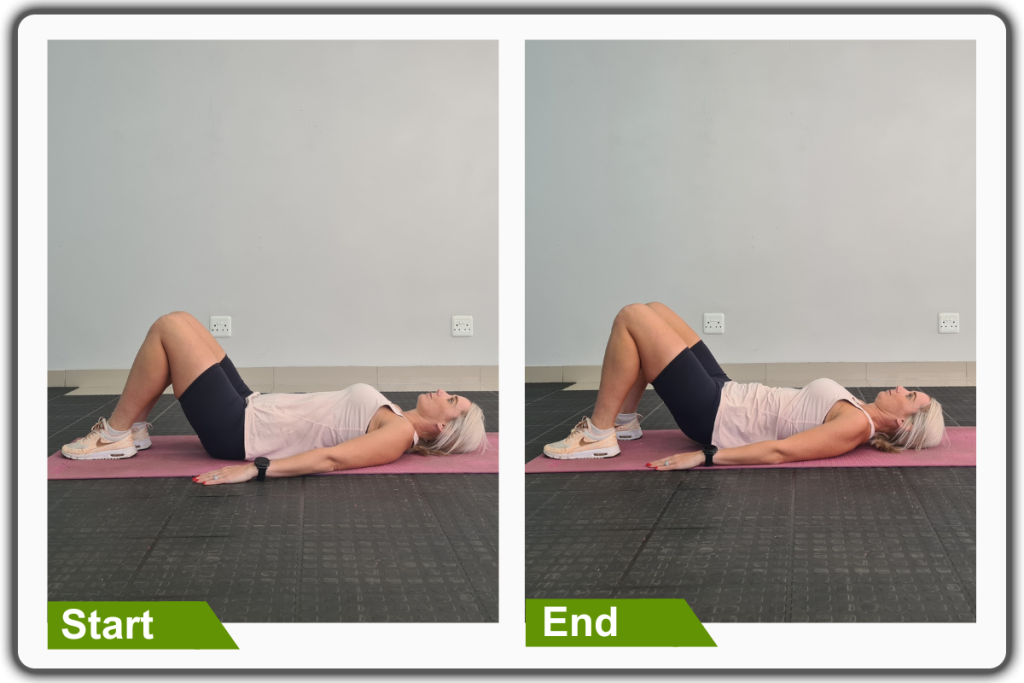
1. Pelvic Tilts
Purpose: Improve pelvic mobility and activate deep core muscles
Lie on your back with knees bent and feet flat on the floor. Gently flatten your lower back into the floor by tightening your abdominal muscles. Squeeze your pelvic floor muscles and tilt your pelvis back, squeezing your knees together. Exhale during tilt, inhale when returning to the starting position. Do this for 10-seconds hold, 5 repetitions.
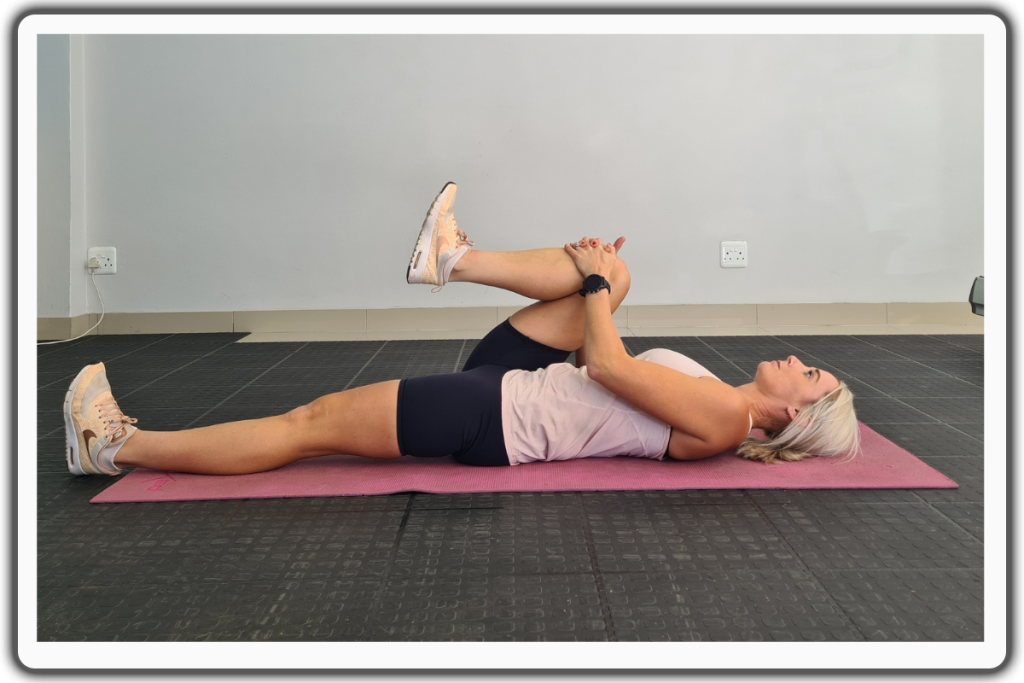
2. Knee-to-Chest Stretch
Purpose: Reduce tension in the lower back and hips
Lie on your back on the floor with your legs straight, maintaining good alignment with your head, shoulders, hips, and legs. Tighten your abdominal area, bend one knee, and use your hands to pull it towards your chest. Look for a light stretch in the hips and lower back. Hold this position for several deep belly breaths, in through your nose and out through your mouth. Relax and return to the starting position. Repeat the movement on the opposite side.
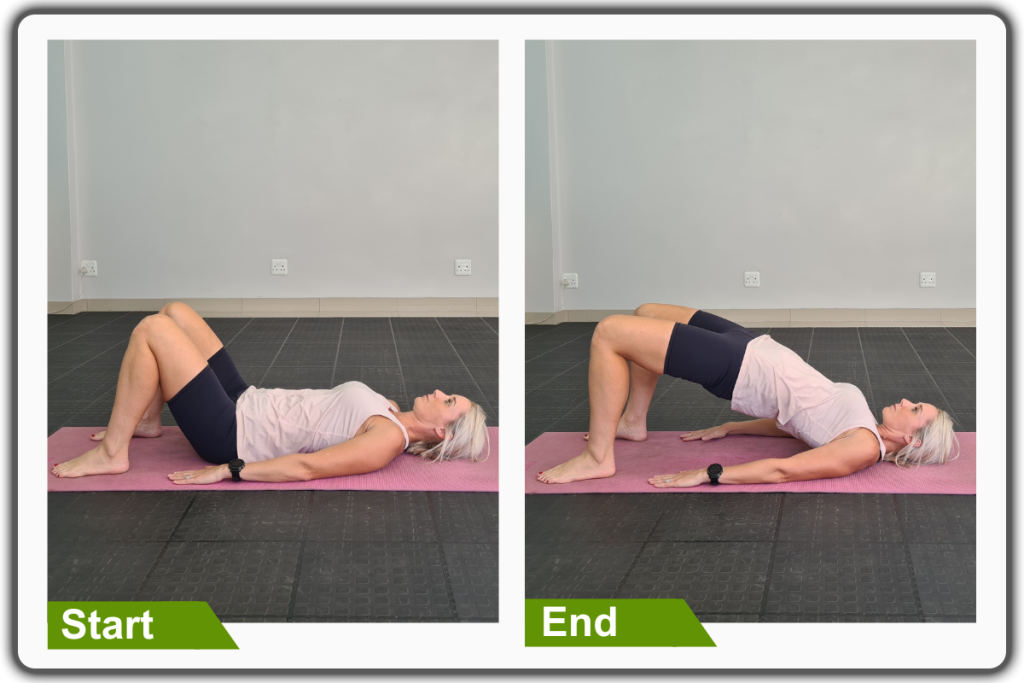
3. Glute Bridges
Purpose: Strengthen glutes and support pelvic stability
Lie on your back with your knees bent and your feet flat on the floor, relaxing your upper body. Place your arms at your side. Contract your abdominal area, then push from your heels to lift your hips. Maintain good alignment with your head, shoulders, hips, and knees. Hold this position for several deep belly breaths, in through your nose and out through your mouth. Relax and return to the starting position.
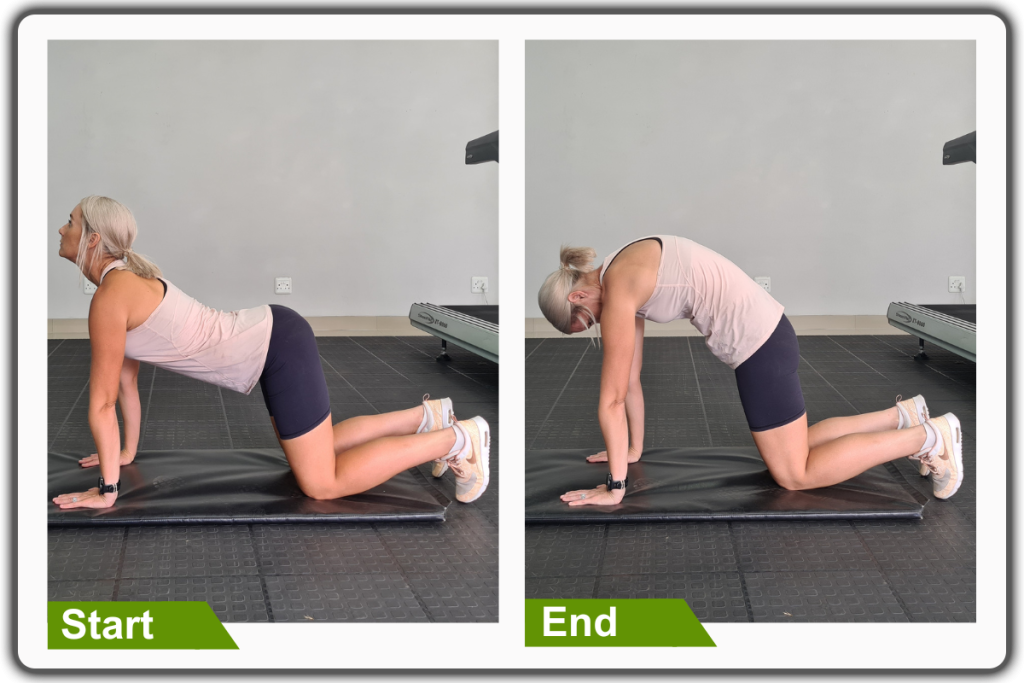
4. Cat-Cow Stretch
Purpose: Improve spinal mobility and reduce stiffness
Begin in a 4-point position with your hands beneath your shoulders and your knees under your hips. Contract your abdominal area. Inhale and slowly raise your head as you arch your mid back. Exhale and lower your head down, rounding out your mid back. Repeat the sequence of movements with 5 repetitions.
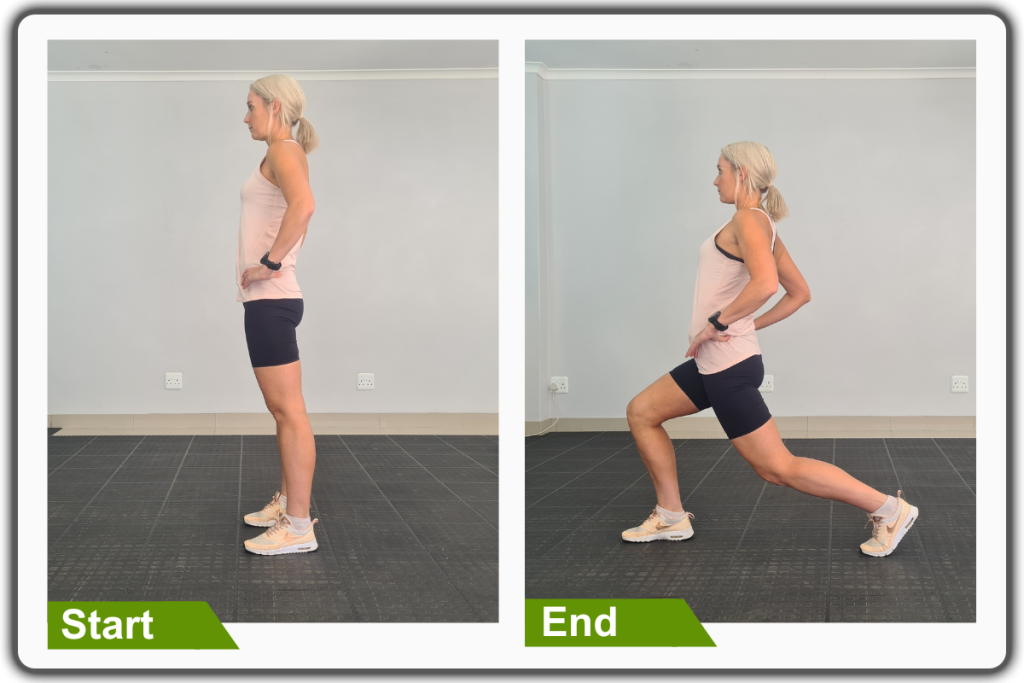
5. Hip Flexor Stretch
Purpose: Release tight hip flexors that contribute to pelvic pain
Begin in an upright standing position with your feet hip width apart. Maintain good alignment with your head, shoulders, hips, and legs. Place your hands on your hips. Engage your core muscles. Take a big step forward with one leg, keeping your toes pointing straight ahead and slightly bending both knees. Tighten up your abdominal area and shift your hips forward. Hold this position for 20 seconds. Return to the starting position and repeat the movement on the opposite side.
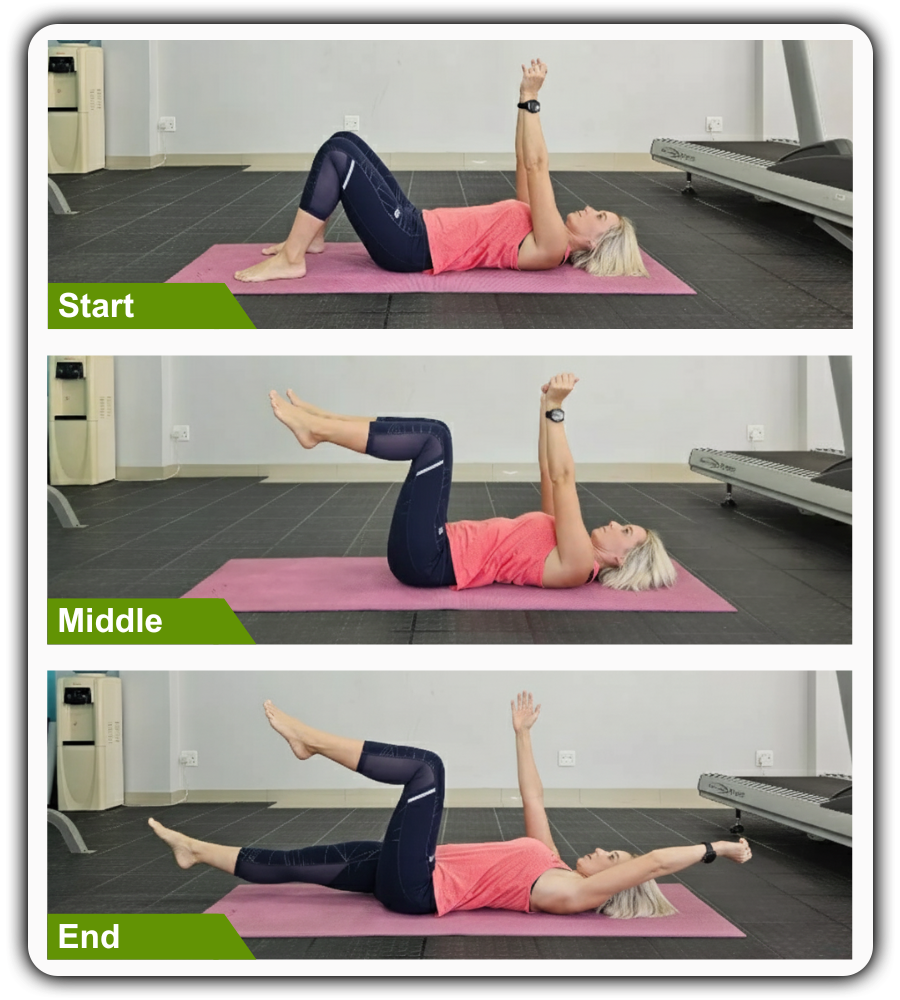
6. Dead Bug Exercise
Purpose: Improve core control and spinal stability
Lie on your back on the floor with your knees bent and your feet flat on the floor, relaxing your upper body. Lift your legs to a 90-degree angle at the hips and knees, and raise your arms toward the ceiling. Tilt and squeeze your pelvic muscles, then extend one arm overhead while lowering your opposite leg down to be parallel to the floor. Return to the starting position and repeat the movement on the opposite side.
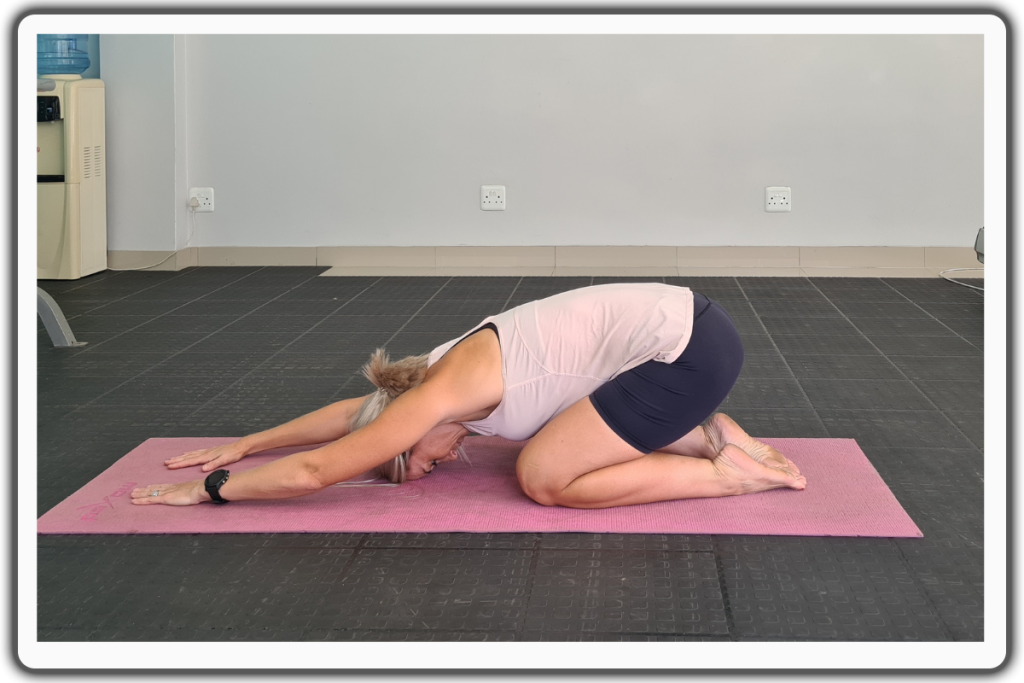
7. Child’s Pose
Purpose: Relax the lower back and pelvis
Begin in an upright kneeling position on the floor with your knees hip width apart, maintaining good alignment with your upper body.Relax your abdominal area, shift your hips back to your feet, and extend your arms in front or place them on the sides. Lower your forehead to the floor, relaxing your mid-back area for a light stretch. Hold this position for several deep belly breaths, in through your nose and out through your mouth.
Dr. Shirley Sahrmann, PT, PhD, a renowned American physical therapist and professor emeritus at Washington University in St. Louis, emphasizes that many cases of pelvic and lower back pain are driven by movement dysfunction rather than structural damage. She explains that repeated poor movement patterns such as excessive lumbar extension, weak glutes, and inadequate core control can overload the pelvis and lower spine over time. Corrective exercises that retrain how the body moves are often more effective than rest alone.
How Often Should You Do These Exercises?
For best results:
- Perform these exercises 3–5 times per week
Combine mobility and strengthening movements
Focus on proper breathing and controlled movement
Consistency is key when addressing pelvic and lower back pain.
Final Thoughts on Pelvic and Lower Back Pain
Pelvic and lower back pain doesn’t have to control your life. With the right combination of gentle mobility, core strengthening, and muscle activation, you can reduce pain and improve how your body moves and feels.
If pain persists or worsens, seek guidance from a qualified healthcare professional who specializes in musculoskeletal or pelvic health.
FAQs
1. What is the connection between pelvic and lower back pain?
The pelvis and lower spine work as a functional unit. When muscles around the hips, core, or pelvic floor are weak or tight, stress increases on the lower back, often leading to pain in both areas simultaneously.
2. Can pelvic and lower back pain be caused by sitting too much?
Yes. Prolonged sitting can tighten hip flexors, weaken glute muscles, and reduce core activation. Over time, this imbalance increases strain on the pelvis and lumbar spine, contributing to chronic discomfort.
3. Are exercises safe if I already have pelvic and lower back pain?
In most cases, gentle, pain-free exercises are safe and beneficial. Movements that improve mobility, strengthen the core, and activate the glutes often help reduce pain. If symptoms worsen or feel sharp, stop and consult a healthcare professional.
4. How long does it take to see improvement from exercises?
Many people notice reduced stiffness and improved mobility within 2–4 weeks of consistent exercise. Long-term strength and pain reduction usually require 6–8 weeks of regular practice.
5. When should I seek professional help for pelvic and lower back pain?
You should seek professional guidance if:
- Pain lasts longer than a few weeks
Symptoms worsen despite exercise
Pain radiates down the leg, causes numbness, or affects bladder/bowel control
These may indicate a more serious condition requiring assessment.
KW References:
Lower Back Pain - https://www.sciencedirect.com/science/article/abs/pii/S1521694210000884
musculoskeletal - https://www.bmj.com/content/325/7363/534.short
Poor posture - https://academic.oup.com/ptj/article-abstract/29/4/165/4695978
References
- The Epidemiology of low back pain
Author links open overlay panel
D. Hoy a, P. Brooks b, F. Blyth c, R. Buchbinder d
https://doi.org/10.1016/j.berh.2010.10.002 Musculoskeletal pain
BMJ 2002; 325 doi: https://doi.org/10.1136/bmj.325.7363.534 (Published 07 September 2002)
Cite this as: BMJ 2002;325:534
The Late Effects of Minor Degrees of Poor Posture
Available for Purchase
John G. Kuhns, M.D.
The Physical Therapy Review, Volume 29, Issue 4, April 1949, Pages 165–168,