
Safe Exercises for Spinal Stenosis: 7 Simple Moves to Reduce Pain and Stay Active
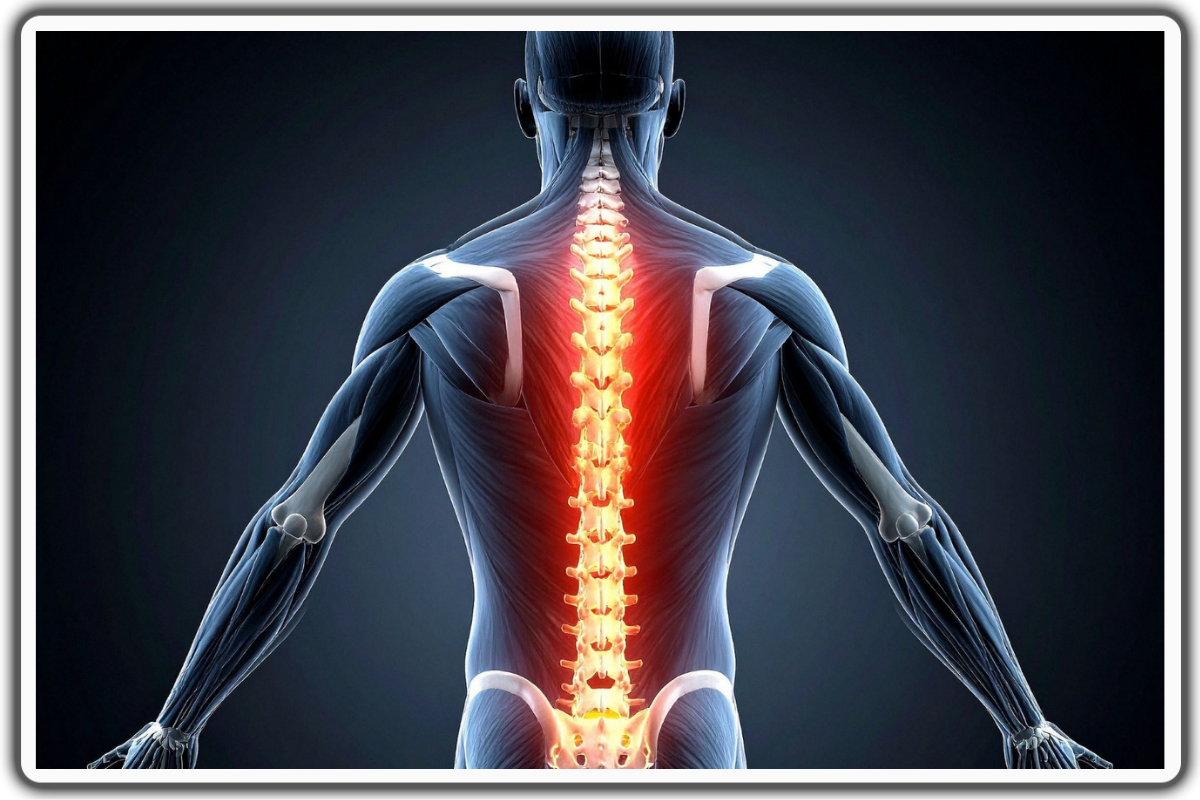
Living with spinal stenosis doesn’t mean you should stop exercising. In fact, the right exercises can reduce pain, improve mobility, and help you stay independent. The key is choosing movements that open space in the spine, support the core, and avoid excessive pressure on the nerves.
Below are 7 safe, simple exercises for spinal stenosis that are commonly recommended by physical therapists and are easy to perform at home.
Why These Exercises Help Spinal Stenosis
Spinal stenosis symptoms often improve with movements that:
- Keep the spine neutral or slightly flexed
- Improve blood flow to the nerves
- Strengthen the core and hips without compression
- Avoid jarring or high-impact forces
These exercises are designed to be low-impact, controlled, and adaptable for different fitness levels.
7 Safe Exercises for Spinal Stenosis
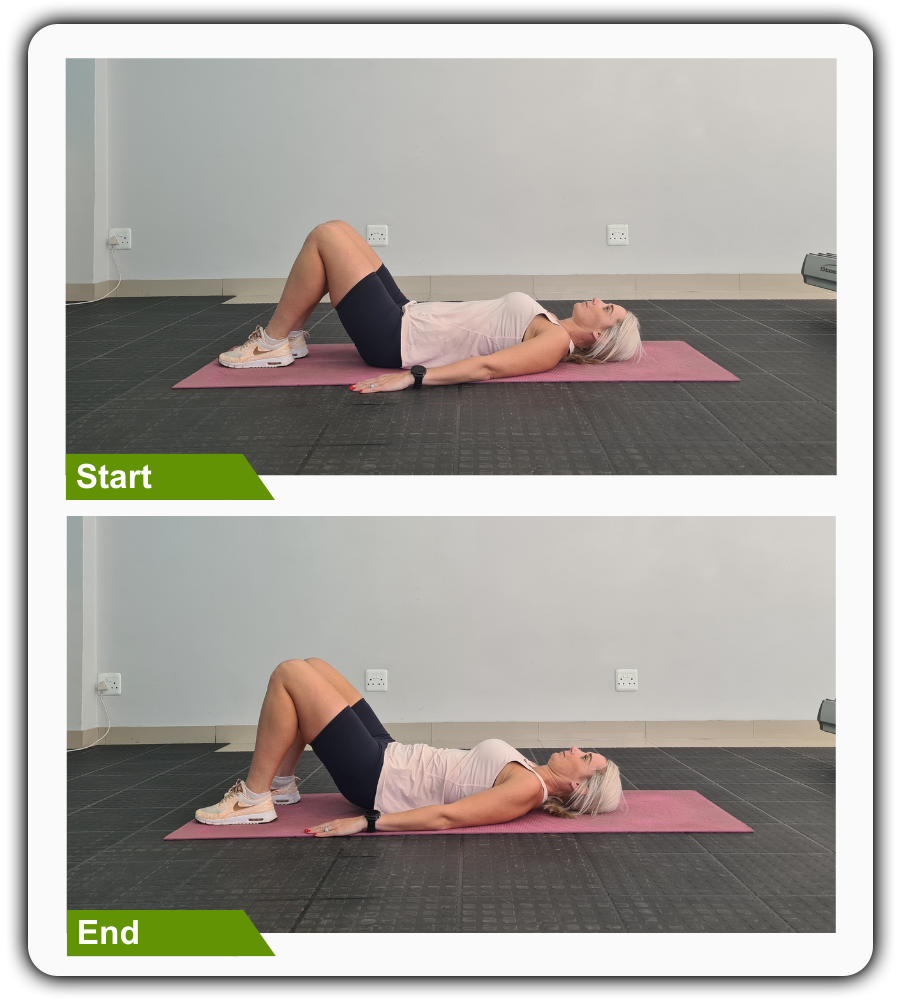
1. Pelvic Tilts
Lie on your back with knees bent and feet flat on the floor. Gently flatten your lower back into the floor by tightening your abdominal muscles. Squeeze your pelvic floor muscles and tilt your pelvis back, squeezing your knees together. Inhale, relax and return to the starting position. Do this for 10-seconds hold, relax, and repeat for 10 times.
Why it helps:
Reduces lower-back stiffness and activates the deep core muscles that support the spine.
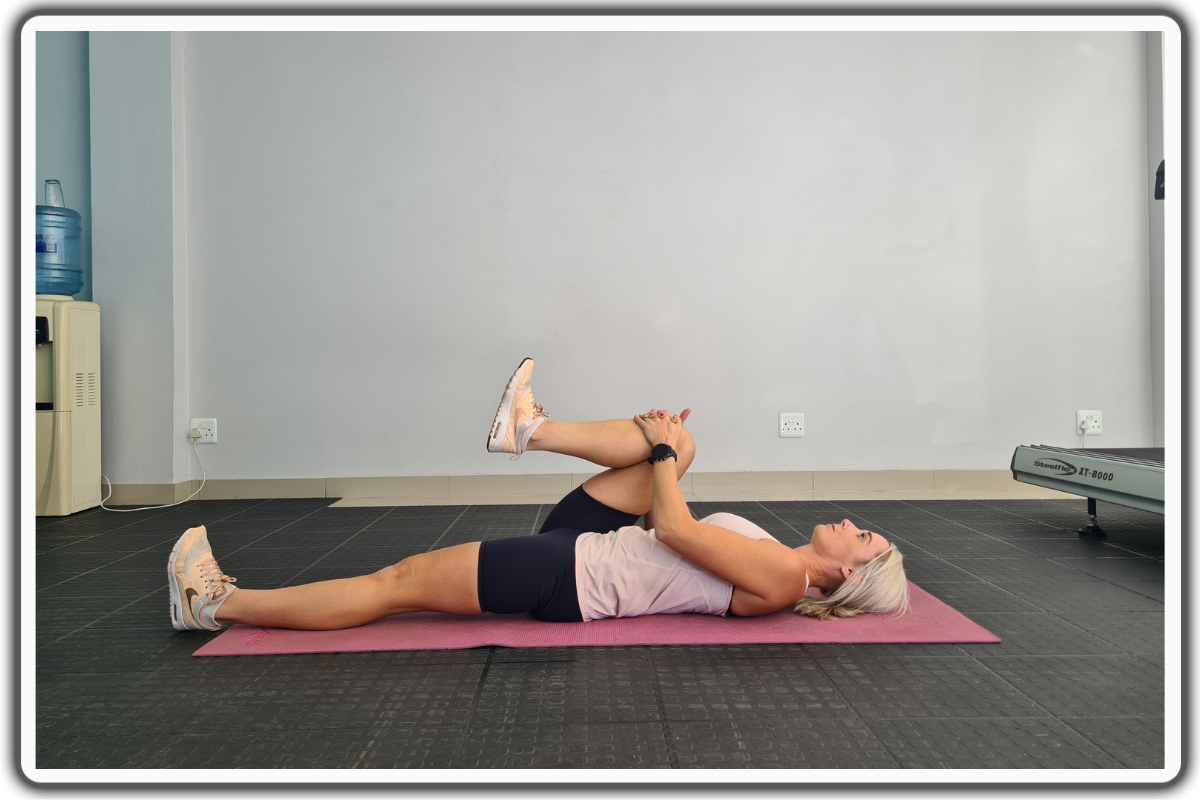
2. Knee-to-Chest Stretch
Lie on your back on the floor with your legs straight, maintaining good alignment with your head, shoulders, hips, and legs. Tighten your abdominal area, bend one knee, and use your hands to pull it towards your chest. Look for a light stretch in the hips and lower back. Hold this position for several deep belly breaths, in through your nose and out through your mouth. Relax and return to the starting position. Repeat the movement on the opposite side.
Why it helps:
This flexed position often relieves pressure on spinal nerves and reduces leg symptoms.
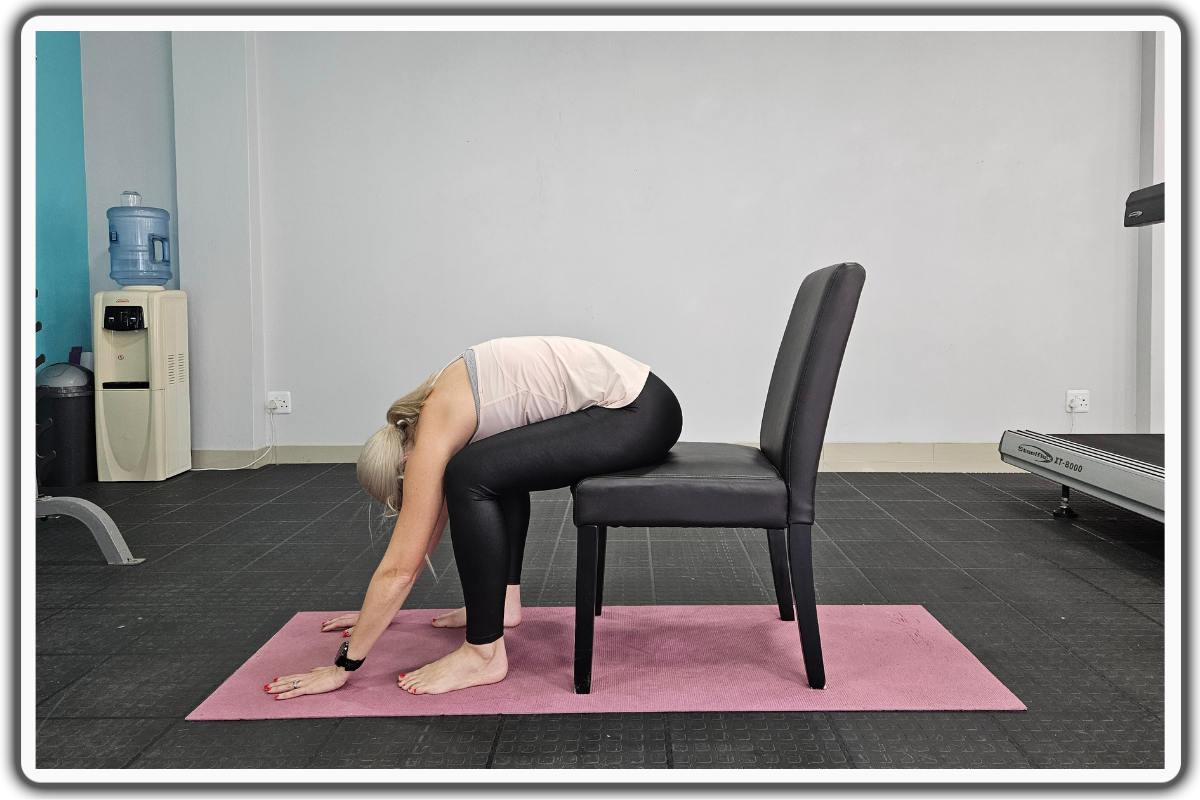
3. Seated Forward Bend
Begin in an upright sitting position on the edge of a chair with your knees bent and feet flat on the floor. Maintain good alignment with your head, shoulders, and hips. Engage your core muscles. Hinge through your hips to slowly bend your upper body forward, pressing your hands on the floor. Hold the position for several deep belly breaths, in through your nose and out through your mouth.
Why it helps:
Encourages spinal flexion, which can temporarily increase space in the spinal canal and ease discomfort.
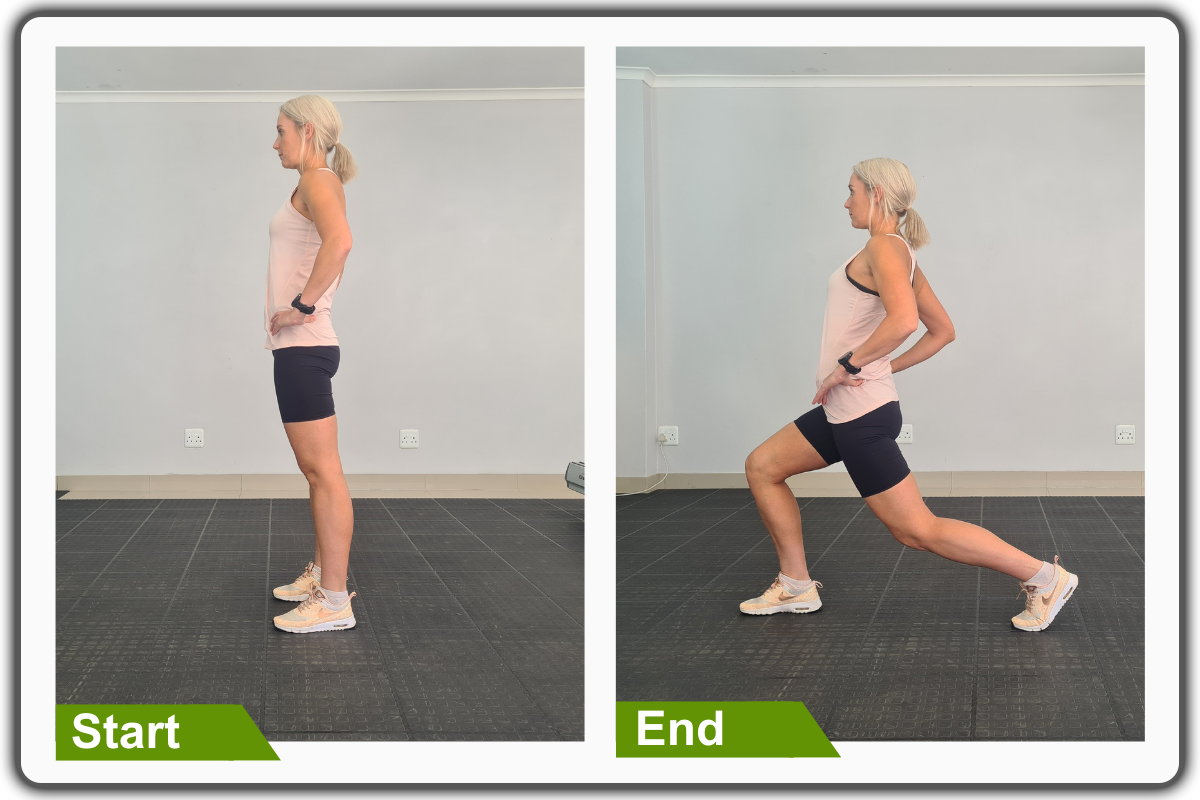
4. Standing Hip Flexor Stretch
Begin in an upright standing position with your feet hip width apart. Maintain good alignment with your head, shoulders, hips, and legs. Place your hands on your hips. Engage your core muscles. Take a big step forward with one leg, keeping your toes pointing straight ahead and slightly bending both knees. Tighten up your abdominal area and shift your hips forward. Hold this position for 20 seconds. Return to the starting position and repeat the movement on the opposite side.
Why it helps:
Tight hip flexors can increase stress on the lower back. Stretching them helps reduce spinal strain.
5. Heel Slides
Lie on your back on the floor with your legs straight. Place your hands at your side. Engage your core muscles. Slowly slide one heel toward your glutes. Hold the position for several deep belly breaths, in through your nose and out through your mouth. Return to the starting position and repeat the movement on the opposite side.
Why it helps:
Promotes gentle movement without loading the spine and improves circulation to the lower body.
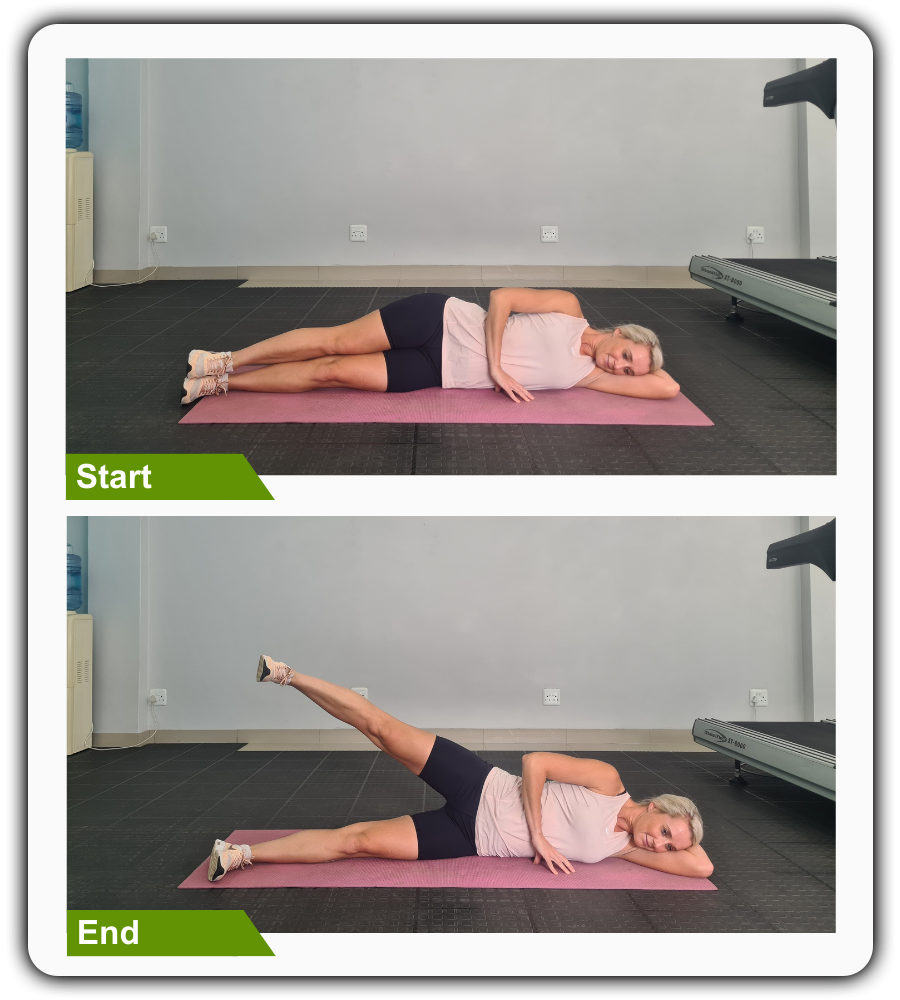
6. Side-Lying Leg Raises
Lie on your side with your legs straight and stacked, hips and shoulders aligned. Bend your bottom elbow and rest your head on your hand, place you top hand on the floor in front of your chest for support. Engage your core and keep your toes pointing forward. Slowly lift your top leg upward without rolling your hips back, then lower it with control. Complete 5 repetitions and repeat the movement on the opposite side.
Why it helps:
Strengthens the hip muscles, which reduces pressure on the lower back during walking and daily activities.
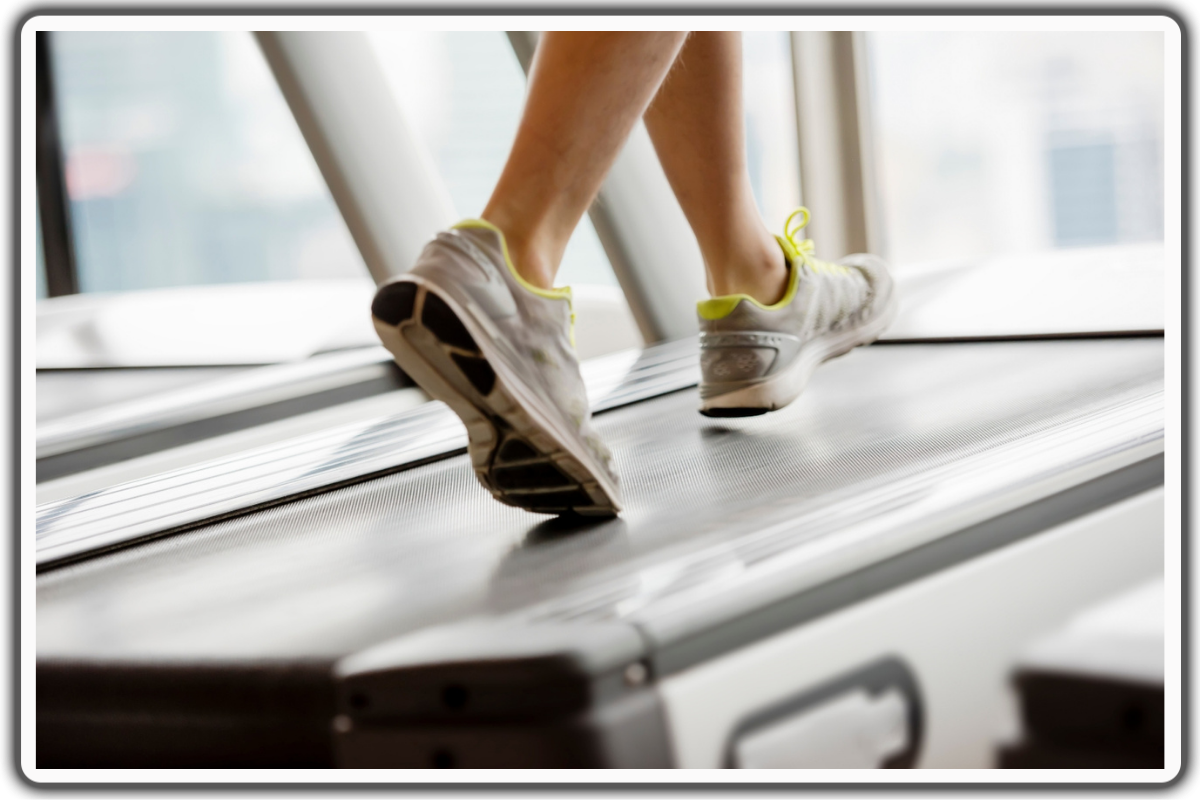
7. Walking (Flat or Slight Incline)
Walking at a comfortable pace, especially on a treadmill with a slight incline, is often well tolerated.
Why it helps:
Improves endurance, circulation, and mobility without excessive spinal compression.
Tips for Exercising Safely With Spinal Stenosis
- Stop any exercise that increases leg pain, numbness, or tingling
- Move slowly and avoid forcing stretches
- Focus on quality over quantity
- Breathe normally don’t hold your breath
- Consult a healthcare professional if symptoms worsen
Dr. Sean E. McCance, an American orthopedic spine surgeon and Co-Director of Spine Surgery at Mount Sinai Medical Center in New York City, emphasizes that exercise choices matter greatly for people with spinal stenosis. As a spine specialist, Dr. McCance highlights that too much back extension and high-impact activities can increase pressure on the nerve roots and worsen symptoms like pain and numbness. Instead, strengthening movements that promote spinal flexion and core stability, as well as low-impact aerobic exercise, are safer and often more effective for long-term mobility and pain relief.
Final Thoughts
Exercise should support your recovery, not aggravate your symptoms. These safe exercises for spinal stenosis help you stay active while minimizing stress on the spine. When combined with proper posture and daily movement, they can make a meaningful difference in comfort and function.
FAQs
1. What are the worst exercises for spinal stenosis?
Exercises that involve excessive spinal extension (backward bending), high-impact motion, or heavy loading such as running, jumping, deep backbends, and heavy squats—can increase nerve compression and worsen symptoms.
2. Can I still exercise if I have spinal stenosis?
Yes. Staying active with low-impact, controlled movements like walking (with breaks), gentle stretching, and flexion-based core work can maintain mobility and reduce pain. Always consult a physical therapist first.
3. Is walking good for spinal stenosis?
Short, regular walks are usually beneficial because they promote circulation and maintain spinal movement without overloading the nerves. However, very long walks or rough terrain can lead to fatigue and discomfort.
4. Should I avoid running with spinal stenosis?
Yes. Running and other high-impact activities can jar the spine and escalate symptoms. Instead, consider walking, swimming, or cycling on a recumbent bike for safer aerobic activity.
5. Do I need a physical therapist for spinal stenosis exercises?
It’s highly recommended. A physical therapist can tailor a safe exercise plan based on your condition, help you avoid harmful movements, and improve strength and flexibility without aggravating symptoms.
KW References:
References
1- Chapter 35 - Spinal stenosis
Author links open overlay panel
João Levy Melancia, António Fernandes Francisco, João Lobo Antunes
https://doi.org/10.1016/B978-0-7020-4086-3.00035-7
2- Back Pain with Leg Pain
Neuropathic Pain (E Eisenberg, Section Editor)
Published: 27 May 2017
Volume 21, article number 32, (2017)
Cite this article
3- A kinematic comparison of overground and treadmill walking
Author links open overlay panel
F. Alton, L. Baldey, S. Caplan, M.C. Morrissey
https://doi.org/10.1016/S0268-0033(98)00012-6