

Sciatica Relief in 8 Minutes: 5 Simple Exercises You Can Do at Home (No Equipment Needed)
Sciatic nerve pain can strike suddenly, causing shooting pain, tingling, or numbness running from your lower back down one leg. The good news? You don’t always need a long workout or fancy equipment to feel better.
This 8-minute routine focuses on gentle, targeted movements that help reduce nerve irritation, improve mobility, and relax the tight muscles commonly associated with sciatica. These exercises are beginner-friendly and can be done right at home.
Tip: Move slowly, breathe slowly and comfortably, and stop if any exercise causes sharp or worsening pain.
Why These Exercises Work for Sciatica Relief
Sciatica pain is often influenced by:
The exercises below are designed to address these issues quickly and safely, making them ideal when you’re short on time but need relief now.
5 Simple Exercises to Calm Nerve Pain Fast
1. Knee-to-Chest Stretch (1–2 Minutes)
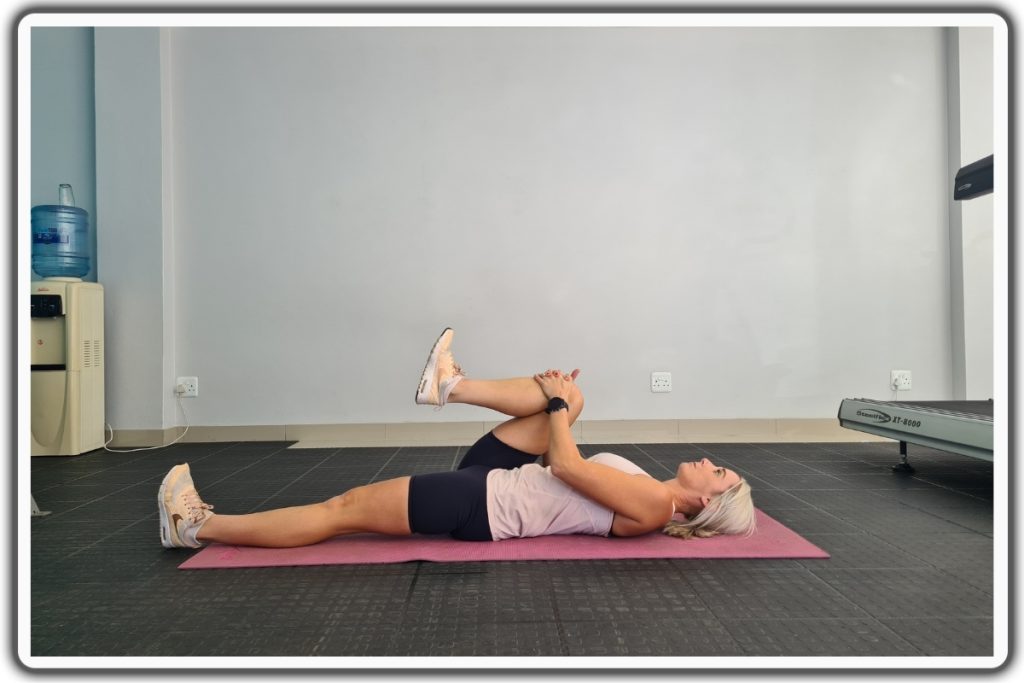
Targets: Lower back and glutes
Lie on your back on the floor with your legs straight, allowing your body to relax comfortably against the floor. Gently engage your abdominal muscles, bend one knee, and use your hands to pull it towards your chest. Look for a light stretch in the hips and lower back.
Hold this position for slow, steady breaths through the nose. Relax and return to the starting position. Repeat the movement on the opposite side.
Why it helps: Reduces compression in the lower spine and relaxes muscles around the sciatic nerve.
2. Seated Spinal Twist (1–2 Minutes)
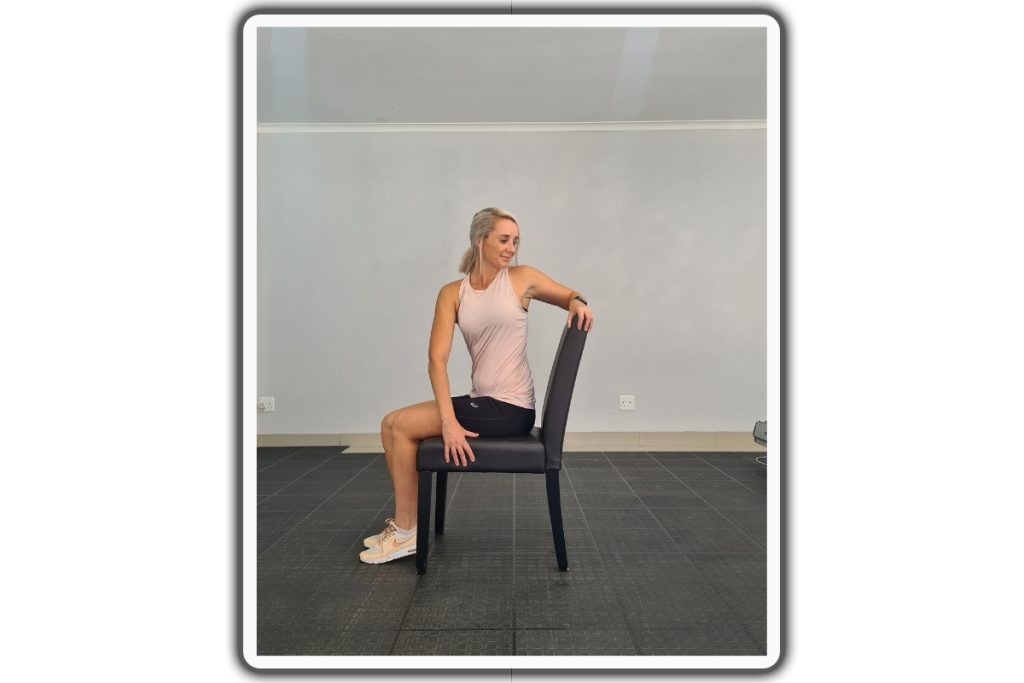
Targets: Spine and hips
Begin in an upright sitting position on a chair with your knees bent and feet flat on the floor. Maintain good alignment with your head, shoulders, and hips, and engage your core muscles to support your posture.
Slowly twist your upper body to the left, placing your left hand on the backrest of the chair for support.
Bring your right hand to your left thigh or the outside of the chair. Turn your head and chest to look over your left shoulder, keeping your spine tall.
Gently deepen the twist using your arms without forcing the movement. Hold the position while breathing deeply, then slowly return to the center and repeat on the opposite side.
Why it helps: Improves spinal mobility and decreases stiffness that can aggravate nerve pain.
3. Figure-4 Stretch (1–2 Minutes)
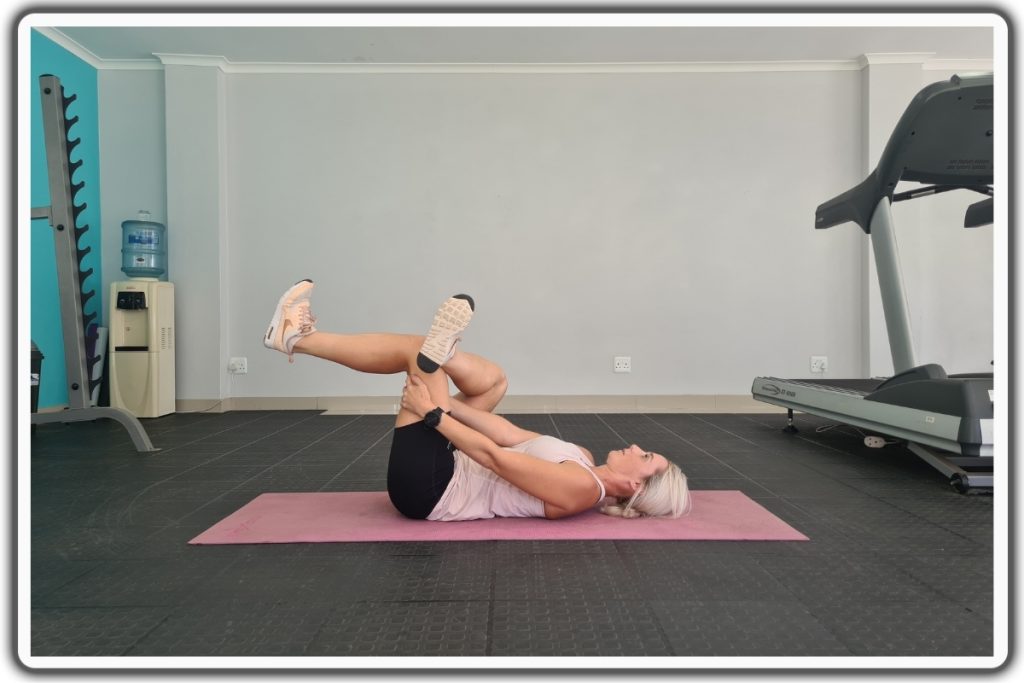
Targets: Piriformis and glutes
Lie on your back with your knees bent and your feet flat on the floor. Cross one ankle over your opposite knee. Place your hands at the back of your leg and hold the position for several deep belly breaths, in through your nose and out through your mouth.
Relax and repeat the movement on the opposite side. To deepen the stretch, gently draw the supporting leg closer to your chest.
Why it helps: Loosens a common trouble spot that can irritate the sciatic nerve.
4. Cat-Cow Stretch (1–2 Minutes)
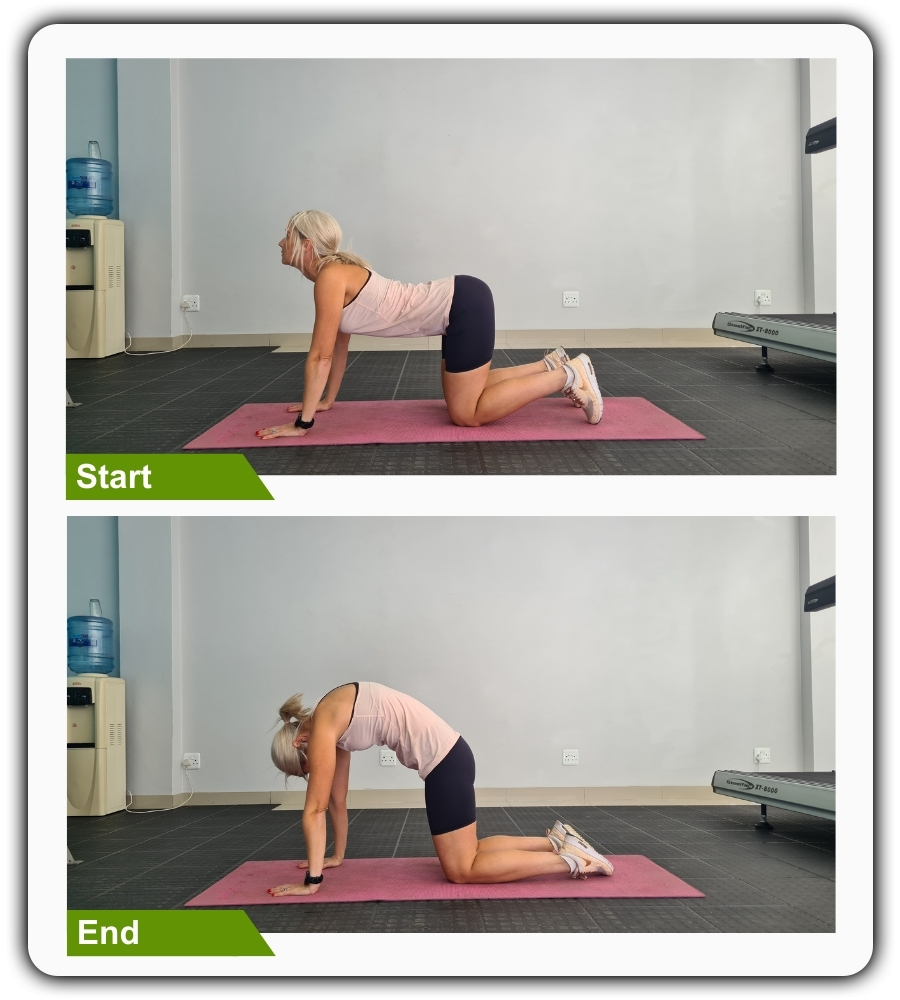
Targets: Entire spine
Begin in a 4-point position with your hands beneath your shoulders and your knees under your hips. Engage your core.
Gently extend your spine as you lift your chest and head. Then, tuck your tailbone in and round your spine as you lower your head downward. Repeat the movement slowly and rhythmically.
Why it helps: Encourages spinal fluid movement and reduces nerve sensitivity.
5. Standing Hamstring Stretch (1 Minute)
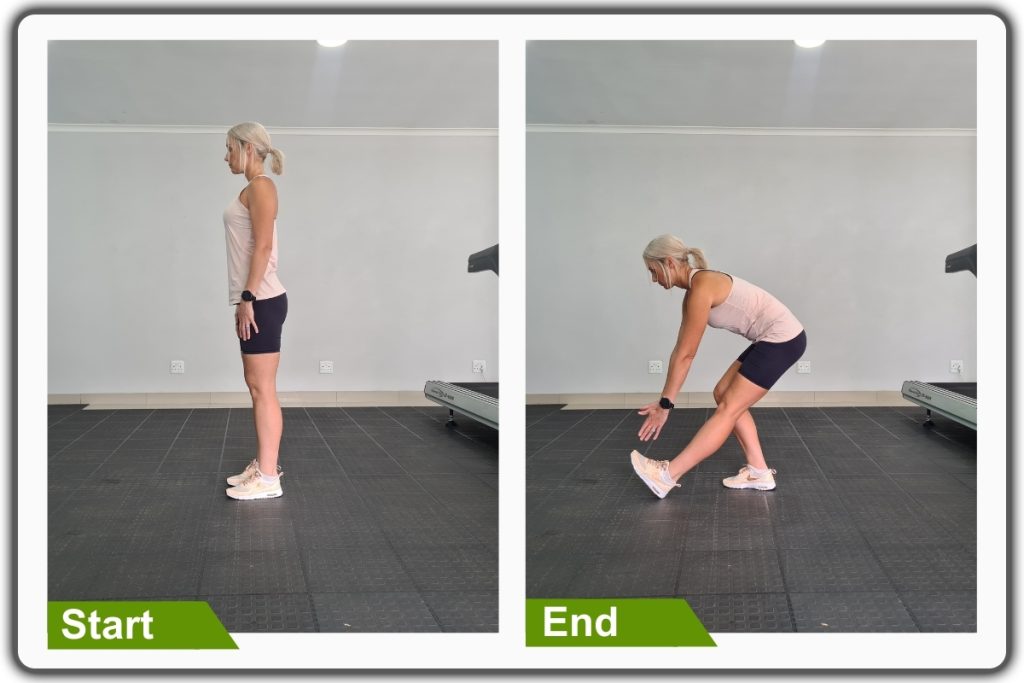
Targets: Hamstrings and lower back
Begin in an upright standing position with your feet hip-width apart. Keep your spine long and your chest relaxed, and engage your core muscles. Step forward with your left foot, keeping the leg straight, and shift your weight back onto your right leg.
Hinge at your hips as you bend your upper body forward, reaching your hands toward your left toes while pressing your left heel into the floor. Hold the position for several deep belly breaths, inhaling through your nose and exhaling through your mouth. Slowly return to the starting position and repeat on the opposite side.
Why it helps: Tight hamstrings can pull on the pelvis and worsen sciatica symptoms.
How to Get the Most Relief
Aubrey Bailey, PT, DPT, CHT — a Virginia-based physical therapist with over 25 years of experience explains that tailored stretches and gentle exercises are among the most effective ways to relieve sciatica pain and improve flexibility.
These movements help reduce pressure on the sciatic nerve, enhance strength in supporting muscles, and promote better mobility. She also emphasizes listening to your body and stopping if an exercise increases pain.
Many physical therapists include manual therapy, pain-relief modalities, and personalized exercise plans in their sciatica care approach.
Final Thoughts
If you’re dealing with nagging nerve pain, this Sciatica Relief in 8 Minutes routine offers a fast, practical way to calm symptoms and restore movement. These five simple exercises are easy to follow and fit seamlessly into even the busiest day.
If your pain persists or worsens, consider consulting a qualified healthcare professional for a personalized plan.
FAQs
1. Can you really get sciatica relief in just 8 minutes?
Yes, an 8-minute targeted routine of gentle stretches and mobility exercises can quickly reduce nerve irritation and muscle tension that contribute to sciatica pain. However, consistent practice and addressing posture and movement habits help long-term improvements.
2. How often should I do these exercises?
For most people with mild to moderate sciatica, performing this routine once or twice daily can help maintain flexibility, reduce muscle tension, and minimize pain flare-ups. Always monitor your symptoms—if any exercise increases pain, numbness, or tingling, reduce the intensity, pause, or consult a healthcare professional before continuing.
3. Should I exercise if my sciatica pain is severe?
Gentle movement and stretching can help many people with sciatica, but avoid exercises that significantly increase pain. Severe symptoms (like loss of muscle strength, numbness, or loss of bladder control) require medical evaluation before attempting at-home exercises.
4. What causes sciatica pain in the first place?
Sciatica occurs when the sciatic nerve is compressed or irritated, which can result from conditions such as a herniated disc, spinal stenosis, or tight muscles like the piriformis pressing on the nerve. This irritation can cause pain, tingling, or numbness that radiates from the lower back through the buttock and down the leg. Other factors, including inflammation or degenerative changes in the spine, can also contribute to symptoms.
5. Can exercise prevent future sciatic episodes?
Yes! Regular mobility and strengthening exercises help support your lower back and hips, improve flexibility, and reduce the likelihood of future sciatic pain by addressing muscle imbalances and pressure on the nerve.
References
1- Anatomy, Sciatic Nerve
Brittney A. Giuffre; Asa C. Black; Rebecca Jeanmonod.
Author Information and Affiliations
Last Update: November 16, 2023.
2- The anatomy and function of the gluteus minimus muscle
Beck M, Sledge JB, Gautier E, Dora CF, Ganz R. The anatomy and function of the gluteus minimus muscle. J Bone Joint Surg Br. 2000;82-B(3):358-363. doi:10.1302/0301-620X.82B3.0820358
3- Walking in (Affective) Circles: Can Short Walks Enhance Affect?
Published: June 2000
Volume 23, pages 245–275, (2000) Cite this article